
Aviation Accident Data Methodology and Definitions

This aviation accident data methodology is the rulebook for which accidents and incidents enter the database, how each record is defined, which sources are trusted first, and when provisional data is corrected. It exists so readers can compare plane crash statistics and safety records without confusing preliminary reports, regulatory categories, or coverage gaps.
Definition: Air Crash DB is a plane crash database that organizes aviation accident reports, statistics, and safety records for researchers, journalists, aviation enthusiasts, and travelers.
TL;DR
- Air Crash DB prioritizes official investigative and regulatory sources, then uses reputable industry databases and media reports only as secondary or provisional evidence.
- Accident, serious incident, incident, event, fatality, injury, operator, aircraft type, and phase-of-flight labels are standardized so records can be compared across time and jurisdictions.
- Preliminary entries can change after final reports, corrected injury counts, aircraft details, jurisdictional updates, or official reclassification.
Aviation Accident Data Methodology at a Glance
Aviation accident data methodology is the set of inclusion rules, definitions, source hierarchy, update rules, and correction procedures behind an accident database. Its purpose is consistent, source-cited aviation safety context, not sensational crash coverage.
A useful methodology tells readers what entered the dataset, what stayed out, and why. It separates official records from preliminary notices, secondary database entries, and media-supported claims. That separation matters when a boarding pass is held with damp fingers and a reader wants risk context, not rumor.
Tools like Air Crash DB, aviation-safety.net, and official agency portals can describe the same occurrence with different field names. A methodology page explains those differences before anyone compares totals. Good aviation accident databases with plane crash statistics, incident reports, fleet safety records, and recent accident news deliver structured context, not proof that one airline or aircraft is safe in every situation.
Methodology Scope and Safety Disclaimer
This methodology explains how records are organized and compared; it does not promise whether a specific flight, airline, route, or aircraft will be safe. The database provides research context, not personal safety guarantees or legal conclusions.
Official investigators, regulators, courts, and other competent authorities determine probable cause, contributing factors, enforcement outcomes, and legal findings. A database record can summarize those findings when they exist, but it should not replace the final report, docket, or agency decision. Database fields can also lag behind agency updates when a final report is published, a classification changes, or an injury count is corrected.
Use the data with a cautious sequence:
- Confirm whether the record is preliminary, final, corrected, or secondary before quoting it.
- Compare the database field with the strongest available official source when cause or responsibility matters.
- Avoid ranking airlines, aircraft models, countries, or operators from raw accident counts alone.
- Require exposure-adjusted denominators such as departures, flight hours, fleet size, route type, and operating environment before making safety comparisons.
- Treat older or incomplete records as historical evidence with known gaps, not as a complete safety profile.
Aviation Data Definitions Used in the Database
Aviation data definitions standardize the labels used to describe an occurrence, aircraft, operation, injury outcome, and source status so records can be compared across agencies and time periods.
Core occurrence labels
An accident normally involves death, serious injury, substantial aircraft damage, or another regulator-defined safety outcome. For U.S. civil aviation, NTSB rules define an aircraft accident around death, serious injury, or substantial aircraft damage; ICAO Annex 13 provides the international investigation framework used by many authorities NTSB definition. A serious incident is an event where an accident nearly occurred. An incident affects safety but does not meet the accident threshold. An event may be reported to an authority without qualifying as a safety occurrence. An occurrence is the broader umbrella term. A fatal accident includes at least one death linked to the occurrence. A hull loss means the aircraft was destroyed or damaged beyond economical repair, though sources vary.
Aircraft and operation labels
Operator names the airline, company, owner, or flight organization. Aircraft type identifies the model or variant, including later corrections to a tail number or registration. Flight phase places the event in takeoff, climb, cruise, approach, landing, or ground movement. Injury severity records fatal, serious, minor, none, or unknown. Source status marks whether the record is official, preliminary, final, secondary, disputed, or corrected.
Regulator-defined terms come first where possible, but normalized labels help compare countries without erasing original source wording.
Five Aviation Accident Database Methodology Facts
- Regulator definitions come first when classifying accidents and selected incidents, because official agencies define their own legal and investigative thresholds.
- Official investigative authorities outrank industry databases and news reports when records disagree on cause, injury count, location, aircraft identity, or classification.
- Occurrence taxonomy prevents accidents, incidents, non-safety events, and routine operating disruptions from being counted as the same thing.
- Preliminary records may change after final reports, especially when investigators revise damage, injuries, flight phase, operator, or probable cause language.
- Coverage boundaries such as military activity, general aviation, aircraft size, passenger capacity, and geography affect every comparison.
For researchers, methodology is often more useful than raw totals because it reveals which records were eligible for counting in the first place. That is the first check before using an aviation accident database for researchers.
A sortable fatalities column on screen can look precise. It still depends on the rules behind it.
Aviation Accident Data Workflow from Source Report to Record
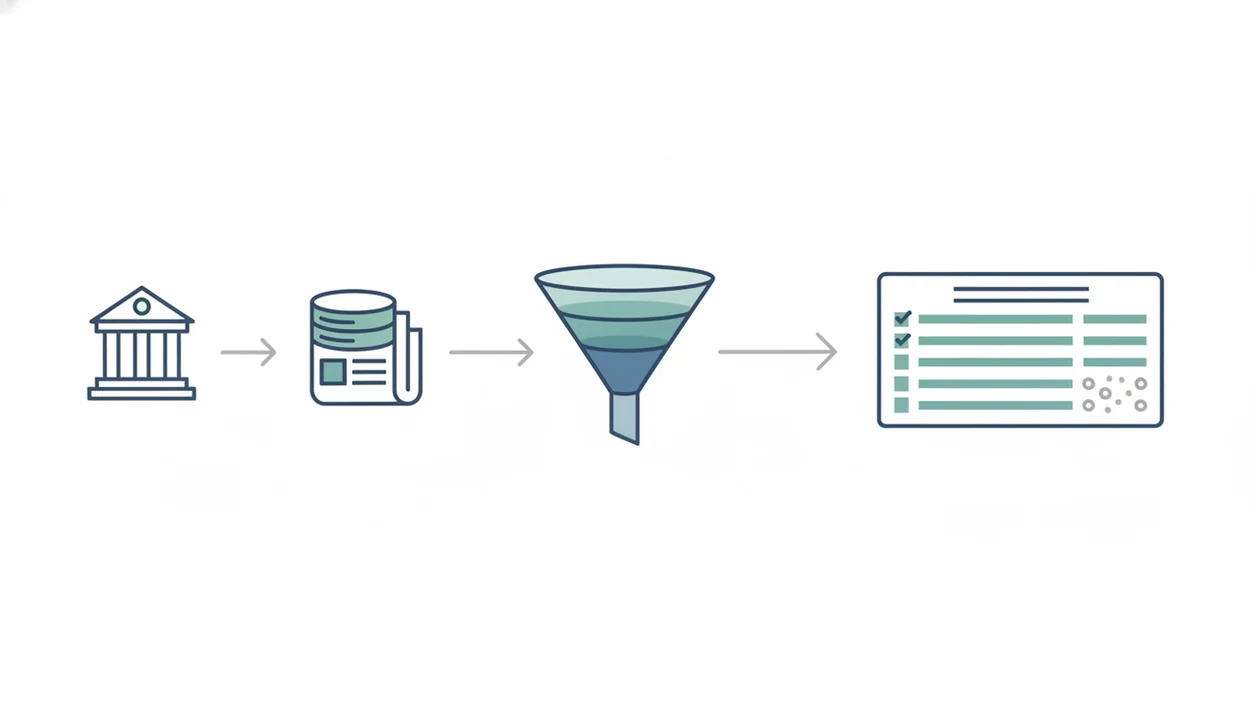
How aviation accident data methodology works: a reported occurrence is detected, checked against source scope, verified, mapped into standard fields, deduplicated, and labeled by source status. The technical terms are taxonomy mapping and deduplication; in plain English, that means matching agency language to consistent database labels and avoiding two records for the same event.
A record may start with an NTSB preliminary entry, an FAA accident notice, an ATSB occurrence listing, or an Aviation Safety Network page. These sources do not have identical scopes. The NTSB public query says its aviation accident database contains civil aviation accidents and selected incidents from 1962 to present within the United States, territories, possessions, and international waters, with some foreign investigations where it participated as an accredited representative source.
The workflow preserves the original source language in notes while assigning normalized fields for comparison. On a quiet archive reading room desk, the gray PDF cover page may say “serious incident,” while another database uses “occurrence.” Both labels are recorded with status, source, and last updated fields.
Plane Crash Data Rules for Database Inclusion
What qualifies for inclusion in a plane crash database? Civil aviation accidents, selected serious incidents, fatal events, substantial aircraft damage, hull losses, and significant safety occurrences usually qualify when supported by an official or credible source.
Included occurrence types
Included records often involve commercial air transport, charter, cargo, training, private, helicopter, and general aviation operations. Boundary decisions depend on aircraft size, operation type, public reporting, and the source agency’s scope. Military events may be included only when public documentation is sufficient and the methodology allows it.
Excluded or restricted records
Excluded or restricted records include non-safety events, minor diversions, duplicate reports, unsupported social posts, routine technical defects, and occurrences outside a source’s coverage. The ATSB National Aviation Occurrence Database lets users search accidents and incidents reported since 1 July 2003, and it excludes notifications coded as non-safety events source.
How to use aviation accident data methodology:
- Check the scope before comparing totals across airlines, countries, or aircraft types.
- Read the source status to see whether the record is preliminary, final, secondary, or corrected.
- Compare definitions for accident, incident, hull loss, and injury severity.
- Verify the boundary rules for military, helicopter, training, and general aviation records.
- Cite the record carefully when publishing, especially if the finding is not final.
Aviation Accident Source Hierarchy and Evidence Labels
Aviation accident source hierarchy ranks official investigative authorities first, then uses operators, regulators, industry databases, and credible media according to evidence quality. The hierarchy prevents early reporting from overruling the official docket.
| Evidence level | Typical sources | How the record is labeled |
|---|---|---|
| Official final | NTSB, FAA, ATSB, BEA, AAIB, TSB, and comparable national bodies | Final or official |
| Official early | Preliminary report, investigation update, public docket entry | Preliminary or updated |
| Corroborating | Airline, airport, manufacturer, regulator, emergency authority | Secondary support |
| Industry database | Aviation Safety Network and similar aviation archives | Secondary |
| Credible media | Named newsroom reports with traceable details | Media-supported |
| Conflicting or revised | Competing sources, later corrections, official amendments | Disputed or corrected |
Aviation data definitions should follow the strongest available source, but weaker sources can fill temporary gaps with labels. A weather radar image on a tablet may explain why readers ask about cause, yet cause language stays provisional until investigators issue findings. The data source reliability guide explains this source ladder in more detail.
When to Use Official Aviation Authorities
Use official aviation authorities when the answer could affect findings, responsibility, legal position, insurance handling, or an active investigation. A database can organize the trail, but agencies such as the NTSB, FAA, ATSB, BEA, AAIB, TSB, and comparable national bodies are the sources to rely on for official conclusions.
When a record is still preliminary, media-supported, or based on secondary evidence, treat it as a working entry rather than a settled account. That caution matters when a headline moves faster than the docket, or when travelers are trying to separate an accident record from a current operational disruption.
- Check the record status before using cause, injury, aircraft, operator, or classification details.
- Consult the relevant investigating authority or regulator when you need official findings or confirmed definitions.
- Contact the competent authority, insurer, attorney, airline, or investigator for legal, claims, enforcement, or investigation questions.
- Treat media-backed and preliminary entries as provisional until an official notice, report, docket update, or regulator statement confirms them.
- Use operator alerts, airport notices, airline updates, and regulator advisories for live travel disruptions, cancellations, airspace restrictions, or operational changes.
Preliminary, Final, and Corrected Aviation Accident Records
Preliminary, final, and corrected labels tell readers how settled a record is. A preliminary record is an early entry; an updated record has newer evidence; a final record reflects completed investigative findings; a corrected record fixes a field; a disputed record contains unresolved conflict; an archived record is kept for history but no longer actively developed.
Early accident data can change. Injury counts, probable cause language, aircraft registration, operator name, flight phase, location, and classification may all shift between the first notice and the final report. A folded timeline beside a black pen often shows why: timestamps, local time versus UTC, and source sequence do not always line up cleanly.
Records are updated after official final reports, agency database revisions, credible correction requests, or source replacement. Preliminary aviation accident data should be treated as a current record of known facts, not as the final account of what happened.
Common Myths About Aviation Data Definitions
Aviation data definitions are often misunderstood, and those misunderstandings produce weak safety claims. The most common errors come from treating every source, country, and occurrence label as interchangeable.
Myth 1: One global database contains every plane crash. No single public database captures every global occurrence because jurisdictions, publication practices, and inclusion rules differ.
Myth 2: Every reported aviation occurrence is an accident. Some reports are incidents, events, service disruptions, or non-safety notifications.
Myth 3: Preliminary accident reports are final. Preliminary reports are early records and may change after investigation.
Myth 4: Every source defines airliner or commercial flight the same. Passenger-capacity thresholds and operation categories vary by database.
Myth 5: Accident totals can be compared without checking scope. Raw totals can mislead if one dataset includes small general aviation aircraft and another does not.
For aviation students, methodology usually works better than memorizing totals because it teaches what each number is allowed to mean. The same habit helps in the ASRS reports vs accident findings debate.
Aviation Accident Data Corrections and Contact Rules
Aviation accident data corrections should identify the record URL, disputed field, proposed correction, and supporting source. A useful request names the exact field, such as aircraft registration, operator, date, location, injury count, or investigation status.
Official sources override unsourced claims. However, credible documentation can trigger review, especially when a final report, docket update, regulator notice, or archived source clarifies an earlier entry. A notebook margin full of timestamps is useful only if the sources behind those timestamps are traceable.
Corrections are handled through updated status labels, editorial notes, source replacement, or field revision. AirCrashDB does not speculate on probable cause before an official finding. If a correction affects a published analysis, the record should make that change visible rather than silently rewriting the history. Journalists using database fields in articles should also check how to cite aviation accident reports before publication.
Limitations
Aviation accident databases are useful, but they are not complete reality. Limitations should be read before comparing operators, countries, aircraft types, or time periods.
- Military aviation coverage is incomplete and may depend on what governments release publicly.
- Minor general aviation incidents and non-injury events may be under-reported.
- Countries use different investigation systems, taxonomies, public portals, and publication timelines.
- Aircraft-size and passenger-capacity thresholds can distort comparisons between databases.
- Preliminary records can be wrong or incomplete until final reports are published.
- Older historical records may lack complete aircraft, operator, injury, location, or registration fields.
- Cause categories should not be treated as final unless the investigating authority has issued findings.
- Media-supported entries can help during early reporting, but they should not carry the same weight as official findings.
- Raw accident counts do not measure exposure by flight hours, departures, route type, terrain, weather, or fleet age.
For nervous flyers, a database can reduce confusion, but it cannot provide a personal safety guarantee. The safer use is context, as explained in aviation safety data for nervous flyers.
FAQ
What is aviation accident data methodology?
Aviation accident data methodology is the rule set for inclusion, classification, source priority, updates, and corrections in an accident database. It explains how records become comparable.
What counts as an aviation accident?
An aviation accident is normally based on regulator definitions involving death, serious injury, substantial aircraft damage, or another qualifying safety outcome. Exact thresholds vary by authority.
What is an aviation incident?
An aviation incident is a safety-related occurrence that does not meet the accident threshold. Some serious incidents are still included because they reveal meaningful safety risk.
Are all plane crashes recorded?
No single database records every global plane crash. Scope, jurisdiction, aircraft category, military disclosure, and reporting rules all affect coverage.
Why do aviation accident counts change?
Counts change when preliminary records become final, injury totals are corrected, aircraft details are revised, or authorities reclassify an occurrence. Source updates can also merge or remove duplicates.
Which aviation accident sources are official?
Official sources include investigative authorities and regulators such as the NTSB, FAA, ATSB, BEA, AAIB, TSB, and comparable national bodies. These sources outrank industry databases and media reports.
Are media reports used in aviation accident databases?
Credible media reports may support provisional entries when official data is not yet available. They do not outrank official investigative or regulatory sources.
What is a preliminary aviation accident report?
A preliminary aviation accident report is an early official or agency-published account of known facts. It may be incomplete and subject to later revision.
What is a hull loss in aviation data?
A hull loss usually means an aircraft was destroyed or damaged beyond economical repair. Definitions can vary by source and insurance or database practice.
How are aviation accident data corrections submitted?
Corrections should include the record, disputed field, proposed change, and supporting source. Air Crash DB reviews corrections against official and credible documentation before changing a record.