
Probable Cause in Accident Reports Explained
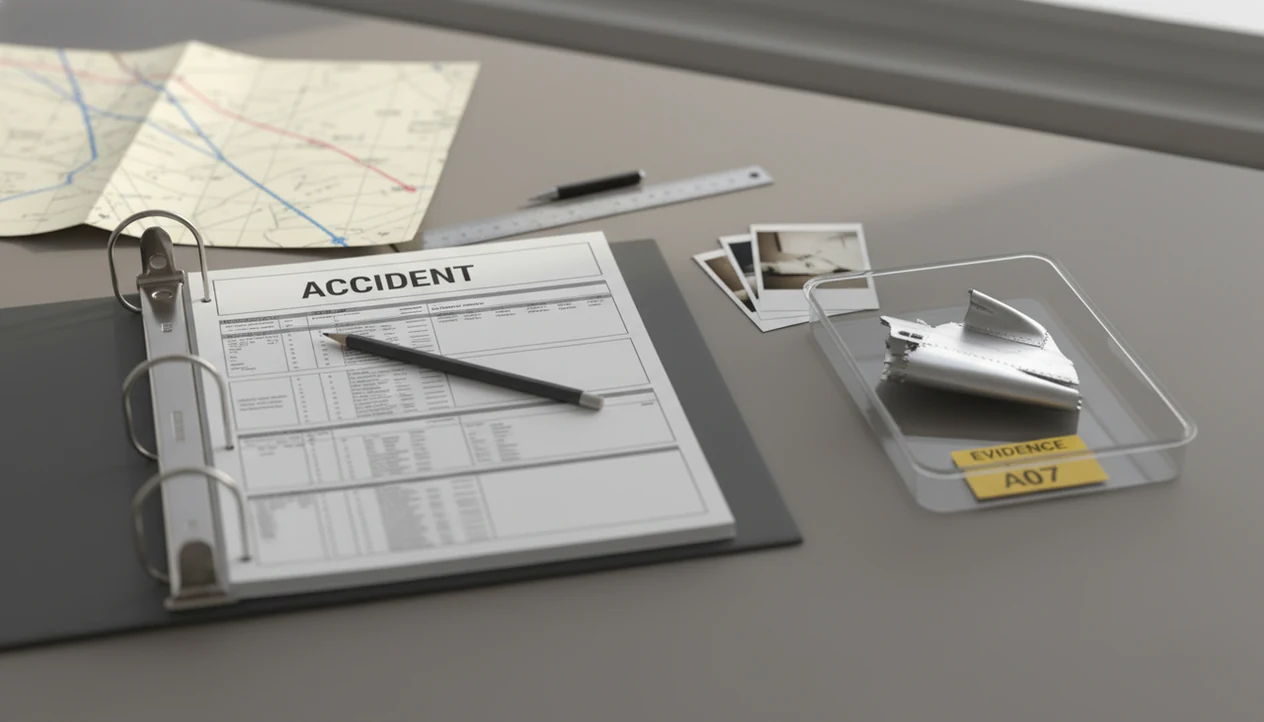
Probable cause in accident reports is the official finding that identifies the most likely factors that led to an aviation accident, based on evidence investigators can verify. It is not a courtroom finding of fault, and it should not be guessed before the final investigation record supports it.
> Definition: In aviation accident investigation, probable cause means the verified explanation judged most likely to account for the accident or serious incident, including the key human, mechanical, environmental, or organizational factors involved.
TL;DR
- The NTSB determines probable cause for U.S. civil aviation accidents after reviewing factual evidence, analysis, and investigative findings.
- Probable cause does not mean absolute certainty, legal blame, or a single isolated trigger.
- Early reports, news coverage, and database entries should avoid treating preliminary facts as final accident investigation findings.
Probable Cause Meaning in Aviation Accident Reports
Probable cause is the most likely evidence-supported explanation for an aviation accident, not a claim that investigators know every detail with absolute certainty. The probable cause meaning is tied to the final investigation record, where facts, analysis, findings, and conclusions have been weighed together.
A final probable cause statement may name more than one factor. It can include pilot actions, aircraft condition, weather, training, oversight, maintenance, or operator procedures. The sentence is often short, but it sits on top of a much larger factual record.
That distinction matters when a gray NTSB PDF cover page is still marked preliminary. A preliminary summary may say the aircraft encountered low visibility or reported engine trouble. It should not be treated as a final cause. For readers comparing report stages, the preliminary vs final accident report distinction is the first guardrail.
Final wording matters because databases, news stories, insurers, lawyers, and safety researchers often reuse the probable-cause sentence without the surrounding analysis.
Five Facts About NTSB Probable Cause Findings
- Legal responsibility: In U.S. civil aviation, the NTSB is responsible for determining probable cause. The Board says it investigates about 1,200 aviation accidents and incidents each year across the United States source.
- Evidence threshold: NTSB probable cause must be grounded in evidence and analysis, not suspicion, rumor, or an early theory from the scene.
- Report structure: NTSB reports separate factual information, analysis, conclusions, and probable cause. We read those labels before quoting the cause line.
- Legal distinction: Courts generally treat factual report portions differently from the Board’s official probable cause conclusion. That split is important in civil litigation.
- Multiple contributors: One finding may include human, mechanical, environmental, and organizational factors. A crew decision and a maintenance issue can appear together.
For aviation safety readers, the safest interpretation method is to read the probable cause after the factual record and analysis, because the cause sentence depends on both.
How Probable Cause in Accident Reports Works
Probable cause in accident reports works through a staged investigation process: evidence collection, factual record, analysis, conclusions, and final causal wording. Investigators evaluate operational, technical, human performance, environmental, and organizational evidence before the Board adopts final language.
The mechanism is not storytelling. It is structured safety learning. Investigators may review wreckage, recorder data, radar tracks, maintenance records, weather products, training files, dispatch material, and interviews. In plain terms, they compare each possible explanation against what the record can actually support.
Sometimes the record does not support a stronger answer. A cause can remain undetermined when wreckage is unrecoverable, data are missing, or competing explanations cannot be separated.
A highlighted probable-cause paragraph can look tidy beside a folded timeline and black pen. The investigation behind it rarely is.
To use a probable cause statement responsibly:
- Confirm whether the report is preliminary, factual, final, or amended.
- Read the factual findings before the probable cause line.
- Separate accident category from formal causal wording.
- Check whether contributing factors are listed after the main event.
- Avoid treating missing evidence as proof of one theory.
How to Use Probable Cause in Accident Research
Use probable cause as a final, source-bound safety finding, not as a shortcut for blame. Good accident research keeps the cause line connected to the report stage, analysis, and docket record that support it.
- Confirm the report stage before you quote or code causal language. A preliminary record, factual update, final report, or amended finding can carry very different weight.
- Read the facts and analysis before extracting the probable-cause statement. The short cause sentence often depends on tests, interviews, weather reconstruction, maintenance records, or human-performance discussion elsewhere in the file.
- Separate the accident category from the official causal wording and any contributing factors. A database label such as loss of control, runway excursion, or engine power loss should not replace the exact finding.
- Record the source URL, docket status, and last-checked date so another researcher can trace the entry back to the same version of the record.
- Flag undetermined causes and preliminary records plainly. Do not infer blame from missing data, early witness accounts, or a single visible fact when the investigation has not supported that conclusion.
NTSB Probable Cause Versus Preliminary Accident Investigation Findings
NTSB probable cause is a final safety conclusion, while preliminary accident investigation findings are early factual observations. Early facts such as weather, maintenance history, pilot communications, or debris position are not automatically causes.
| Report stage | What it contains | What it should not be used for |
|---|---|---|
| Preliminary report | Basic facts, aircraft, location, injuries, early sequence | Declaring final cause |
| Factual record | Verified evidence, tests, interviews, records | Assigning blame without analysis |
| Analysis and conclusions | Investigator evaluation of evidence | Quoting one fact as the whole explanation |
| Final probable cause | Board-adopted causal and contributing factors | Proving civil liability by itself |
Investigations can take months or years because lab work, component exams, interviews, weather reconstruction, and docket review take time. A tail number copied from a placard photo may match early coverage, but the aircraft variant or operator name can be corrected later in the official docket. The wider NTSB report timeline explains why the public record changes in stages.
Four Accident Investigation Evidence Categories That Shape Probable Cause
Investigators shape probable cause by testing evidence across human, mechanical, environmental, and organizational categories. A National Academies analysis describes a systems approach in which significant human, technical, and organizational causal factors should be accounted for source.
Human and operational findings
These findings can include pilot decisions, fatigue, training, workload, crew coordination, air traffic interactions, dispatch choices, and standard operating procedure use. Crew resource management role-play cards in a hangar briefing may look routine, but those training records can become relevant when communication breaks down.
Mechanical and environmental findings
Aircraft and maintenance evidence can involve component failure, inspection history, configuration, design issues, deferred defects, or incorrect installation. Environmental evidence includes weather, terrain, visibility, icing, wind shear, runway condition, and lighting.
Organizational and systemic findings
Systemic factors may include operator procedures, maintenance oversight, regulatory gaps, safety culture, training supervision, or economic pressure. Good aviation accident analysis asks how conditions lined up, not just who touched the last switch.
Five Examples of Probable Cause Language in Aviation Reports
These examples show common wording patterns, not findings about a named accident. Final probable cause language must come from the specific report record.
- Loss of control in flight: A statement may cite the pilot’s failure to maintain control, with contributing factors such as spatial disorientation, weather, training, or system malfunction. NTSB safety material has described loss of control in flight as one of the leading fatal general aviation accident categories; if using the 48 percent figure, cite the exact NTSB study or replace the number with a sourced figure from the report source.
- Controlled flight into terrain: Wording may combine continued flight into instrument conditions with terrain awareness, navigation, or clearance issues.
- Engine power loss: The cause line may identify a mechanical failure, fuel starvation, maintenance error, or undetermined loss of power.
- Runway excursion: A finding may cite approach speed, braking action, runway contamination, tailwind, or decision-making.
- Maintenance-related failure: The statement may connect an installation, inspection, or documentation problem to the accident sequence.
For database work, accident category should be coded separately from final probable cause wording because categories simplify patterns while official findings preserve case-specific detail.
Five Myths About Probable Cause Meaning
- Myth 1: Probable cause means 100 percent certainty. It means the most likely explanation supported by verified evidence, not mathematical certainty.
- Myth 2: Probable cause is legal blame. It is a safety finding. It is not the same as a court finding of negligence or liability.
- Myth 3: Every crash has one single cause. Many accident investigation findings include several contributing factors across people, equipment, weather, and organizations.
- Myth 4: Investigators can call a best guess probable cause. A guess is not probable cause unless the record supports it through evidence and analysis.
- Myth 5: The final cause captures every systemic issue. A short probable cause line may leave deeper organizational discussion in the analysis section.
For researchers, the most reliable reading is to treat the probable cause as a summary of supported causal factors, while checking the analysis for broader safety context.
Why News Reports Should Not Guess Probable Cause Early
Should news reports guess probable cause before investigators finish? No. Preliminary evidence can be incomplete, misleading, or later contradicted by recorder data, lab results, maintenance records, or witness interviews.
Missing flight data, damaged wreckage, incomplete logbooks, and uncertain witness accounts can all change the investigation path. A muted newsroom television crawl may mention weather within minutes. That does not make weather the cause.
Premature blame distorts safety learning. It can lead the public to treat one visible fact as the whole explanation, while investigators are still testing alternatives. Aviation accident databases with plane crash statistics, incident reports, fleet safety records, and recent accident news should deliver sourced status labels and context, not instant blame.
Air Crash DB is a plane crash database that organizes aviation accident reports, statistics, and safety records for researchers, journalists, aviation enthusiasts, and travelers.
Probable Cause, Legal Fault, and NTSB Report Evidence
NTSB probable cause is a safety finding, not a court judgment. It is designed to explain what most likely led to an accident so future risk can be reduced, not to decide who owes damages.
In general terms, factual portions of NTSB reports may be treated differently from the Board’s official probable cause conclusion. That distinction matters because litigation and safety investigation serve different purposes. One asks about liability under legal standards. The other asks what happened and what can be learned.
For the U.S. evidentiary distinction, cite the governing rule directly: 49 C.F.R. § 835.2 distinguishes Board accident reports from factual accident reports, and 49 U.S.C. § 1154(b) limits use of Board reports in civil damages actions source.
This is informational, not legal advice. Litigants often need independent expert analysis, depositions, aircraft records, and court-admissible evidence rather than relying directly on the official probable cause conclusion.
A shared document of verified sources helps here. Labels such as source, status, last updated, and investigation phase keep the record separate from the argument. For structured research, an NTSB aviation accident search is usually a better starting point than a news archive because it points back to official docket material.
Limitations
Probable cause is useful, but it cannot prove everything about an accident. The limits belong in the record, not in a footnote.
- Evidence quality can limit the final finding, especially when recorders, wreckage, or maintenance records are missing or damaged.
- Some accident reports may leave probable cause undetermined when no explanation meets the evidentiary threshold.
- Brief probable cause wording can under-represent deeper systemic or organizational issues discussed in the analysis.
- International accident authorities may use different terminology, formats, or levels of detail.
- Final investigations can take years, leaving databases and news reports dependent on preliminary information for a time.
- Official probable cause conclusions are generally not designed to prove civil liability.
- Accident categories in databases may not perfectly match the exact wording of final probable cause statements.
Tools like Air Crash DB and AirCrashDB-style research workflows can organize the record, but they still depend on source status. If the official docket is preliminary, the database entry should say so.
FAQ
What does probable cause mean in an accident report?
Probable cause means the most likely evidence-supported explanation for an accident or serious incident. It may include several contributing factors.
Who determines probable cause in an NTSB aviation accident report?
The NTSB determines probable cause for U.S. civil aviation accidents. Other parties may provide evidence, but the Board adopts the official finding.
Does probable cause mean investigators are certain?
No. Probable cause does not mean absolute certainty. It means the explanation is best supported by the verified investigation record.
Can probable cause be listed as undetermined?
Yes. Investigators may list probable cause as undetermined when available evidence does not support a stronger conclusion.
Is probable cause the same as legal blame?
No. Probable cause is a safety finding, not a legal finding of fault, negligence, or liability.
Can one aviation accident have multiple probable causes?
Yes. A probable cause statement may include human, mechanical, environmental, and organizational contributors in one finding.
When is probable cause released in an accident investigation?
Probable cause usually appears in the final investigation report. It should not be assumed from a preliminary report or early news coverage.