Runway Incursion Meaning, Causes, And Prevention
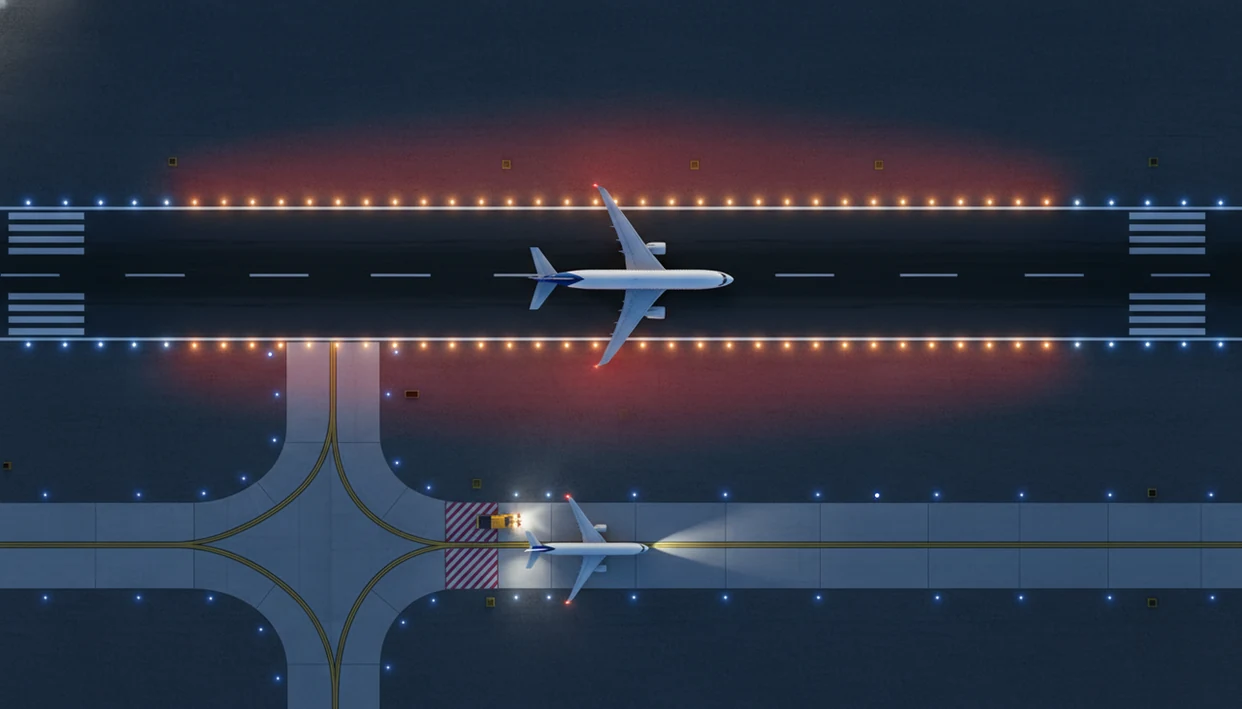
A runway incursion is the incorrect presence of an aircraft, vehicle, or person on a runway or its protected runway area, creating a possible runway conflict during takeoff or landing. It differs from a runway excursion, where an aircraft unintentionally leaves the runway surface by veering off the side or overrunning the end.
Definition: A runway incursion is any aerodrome occurrence involving the incorrect presence of an aircraft, vehicle, or person on the protected area of a surface designated for aircraft landing or takeoff. Source note: This wording follows the ICAO runway-incursion definition and the FAA runway safety definition of an incorrect presence on a runway or protected area; see ICAO runway safety materials (https://www.icao.int/safety/RunwaySafety/) and FAA runway safety guidance (https://www.faa.gov/airports/runway_safety).
TL;DR
- Runway incursions are about unauthorized or incorrect entry onto a runway or protected runway area.
- Runway excursions are different: they involve an aircraft leaving the runway surface unintentionally during takeoff or landing.
- Most prevention focuses on ATC-pilot communication, taxi planning, airport surface markings, lighting, surveillance, and runway status systems.
Runway Incursion Definition And Protected Runway Area Meaning
A runway incursion is the incorrect presence of an aircraft, vehicle, or person on the protected area of a runway used for landing or takeoff. That is the ICAO and FAA-style definition, stated in plain language.
An incursion can be reportable even when there is no collision, no damage, no injury, and no aircraft actively rolling. The safety issue is incorrect presence in a place reserved for controlled runway movement. The protected runway area can include more than the painted pavement. It may include runway safety areas, hold-short protected zones, and areas that affect instrument landing systems.
A checklist clipped to a kneeboard does not help if the crew taxis past the wrong hold-short line.
Air Crash DB treats incursions as safety-relevant incidents because they are leading indicators for collision risk, not because every case becomes an accident.
Five Runway Incursion Facts Every Reader Should Know
- Fact 1: A runway incursion involves incorrect presence on a runway or its protected runway area.
- Fact 2: A runway incursion is not the same as a runway excursion, which involves an aircraft leaving the runway surface unintentionally.
- Fact 3: Communication breakdowns and situational awareness problems are common contributors, especially during taxi, runway crossing, and line-up instructions.
- Fact 4: The core hazard is a runway conflict with a departing or arriving aircraft.
- Fact 5: Defenses include markings, lighting, standard phraseology, runway status lights, ground radar, and taxi briefings.
The FAA documented 1,732 runway incursions in the United States during fiscal year 2019, according to FAA runway safety statistics (https://www.faa.gov/airports/runway_safety/statistics/). That figure matters because it counts warning events, not only crashes. In a database view, those lower-severity events help separate recurring surface-risk patterns from one-off accident narratives.
How Runway Incursion Risk Works On Airport Surfaces
Runway incursion risk works through the interaction of aircraft, airport vehicles, pedestrians, ATC clearances, taxi routes, hold-short lines, and runway crossings on the maneuvering area. A harmless position at 10:04 local time can become unsafe at 10:05 if another aircraft is cleared to land.
A runway conflict is a potential collision situation created by incompatible runway occupancy. The conflict may involve an aircraft entering, crossing, lining up, landing, or departing while another aircraft, vehicle, or person is in the protected runway area.
Timing is the whole problem.
Human factors matter here: workload, expectation bias, readback/hearback errors, unfamiliar airports, fatigue, and night or low-visibility operations. Rain-darkened runway centerline lights can make a familiar airport feel different. Surveillance systems and lighting reduce risk, but they do not replace correct clearances and active situational awareness.
Common Runway Incursion Scenarios At Airports
Runway incursions usually begin with a simple mismatch: a person, aircraft, or vehicle is somewhere the runway system does not expect it to be. Some scenarios create immediate near-collision risk. Others are low-severity, but still reportable because the protected runway area was breached.
Aircraft Deviation Scenarios
Hold-short crossing: An aircraft crosses a hold-short line without clearance.
Wrong runway entry: A crew enters or lines up on the wrong runway, sometimes after misreading taxiway geometry.
Follow-the-leader taxi: An aircraft follows another aircraft incorrectly instead of complying with its own clearance.
Vehicle And Pedestrian Scenarios
Vehicle deviation: A maintenance, inspection, rescue, or airport operations vehicle enters the protected runway area during active operations.
Pedestrian presence: A worker is inside a restricted runway area without the correct coordination.
The notebook margin full of timestamps matters in these cases. A one-minute difference can change the severity label.
Runway Incursion vs Excursion: Key Difference
A runway incursion involves unauthorized or incorrect entry onto a runway or protected runway area. A runway excursion involves the operating aircraft unintentionally leaving the runway surface by veering off the side or overrunning the end.
| Category | Runway incursion | Runway excursion |
|---|---|---|
| Basic meaning | Incorrect presence on the runway or protected area | Aircraft leaves the runway surface unintentionally |
| What is misplaced | Another aircraft, vehicle, or person | The operating aircraft itself |
| Typical phase | Taxi, runway crossing, line-up, landing, or departure conflict | Takeoff roll, rejected takeoff, landing roll, or overrun |
| Database coding | Surface conflict or protected-area entry event | Runway departure event |
| Edge cases | May precede collision or rejected takeoff | May follow evasive action or loss of directional control |
Both can appear in accident and incident databases, but they should be coded differently. A complex event can involve both, especially if an incursion triggers a rejected takeoff and the aircraft later overruns. For broader causal context, compare related categories in plane crash causes.
Runway Incursion Causes And Investigation Labels
What causes runway incursions? The usual investigation labels are pilot deviation, vehicle or pedestrian deviation, and ATC operational incident. Those labels describe the initiating error category, not the full root cause.
FAA runway-safety data have repeatedly shown pilot deviations as the largest coded category of U.S. runway incursions, with general aviation contributing a large share of pilot-deviation events; cite the specific FAA annual or runway-safety report used for the percentage before publishing (https://www.faa.gov/airports/runway_safety/statistics/). That does not mean one pilot simply “caused” the event. It means the first coded deviation was assigned to the pilot side of the operation.
Contributors can include non-standard phraseology, airport unfamiliarity, task saturation, fatigue, low visibility, and complex taxiway layouts. An instructor tapping the altimeter glass during training is a reminder that attention is limited. On the ground, the same human limit applies to signs, radio calls, moving traffic, and airport diagrams. Related coding issues appear in pilot error plane crash statistics.
Runway Incursion Prevention And Runway Conflict Defenses
Runway incursion prevention combines phraseology, taxi planning, surface design, surveillance, and reporting culture. ICAO runway-safety materials identify runway-safety events, including incursions and excursions, as a major accident category in commercial aviation; cite the exact ICAO report or dashboard used for the 20% to 25% figure before publishing (https://www.icao.int/safety/RunwaySafety/).
The main defenses are standard ATC-pilot phraseology, disciplined readback/hearback checks, airport diagram review, planned taxi routes, and sterile cockpit practices while taxiing. Physical defenses include runway markings, hold-short lines, signage, lighting, stop bars, and runway status lights. Technical defenses include ground radar, surface movement guidance systems, and controller alerts.
To reduce runway conflict risk in practice:
- Review the airport diagram before taxi.
- Brief every runway crossing and hold-short point.
- Read back runway assignments and hold-short instructions exactly.
- Stop when clearance, position, or route becomes uncertain.
- Report confusing signage, markings, or clearance issues through safety channels.
Technology helps, but prevention still depends on training, procedures, and a culture that treats small errors as useful warnings.
When A Runway Incursion Applies In Aviation Databases
In aviation databases, runway incursion coding applies when the event involves incorrect presence on a runway or protected runway area. It may be recorded even without a crash, damage, injury, emergency evacuation, or final accident report.
That distinction matters. An incursion is not the same as an excursion, ground collision, taxiway incident, or general surface incident label. A sortable fatalities column on screen can hide this difference if the database only highlights fatal outcomes. Good aviation accident database with plane crash statistics, incident reports, fleet safety records, and recent accident news deliver structured context, not a single fear-based ranking.
Air Crash DB is a plane crash database that organizes aviation accident reports, statistics, and safety records for researchers, journalists, aviation enthusiasts, and travelers. Consistent coding supports statistics, trend analysis, journalism, and safety research. The same principle is covered in our aviation accident data methodology, where source status and investigation phase are separated from narrative summaries.
How To Classify A Runway Incursion In A Database
Classify a runway incursion by deciding whether the event put an aircraft, vehicle, or person incorrectly inside a runway or protected runway area. The label should follow the surface-position facts first, then the clearance history, source status, and severity notes.
- Confirm that the aircraft, vehicle, or person entered the runway surface or a protected area tied to landing or takeoff operations. Do not rely only on a headline that says “runway incident.”
- Check the clearance and coordination record. Look for whether the presence was cleared, coordinated with tower or ground control, or contrary to an instruction such as hold short.
- Separate the event from nearby categories. An aircraft leaving the pavement is an excursion; a taxiway-only event or ramp collision should not be forced into an incursion field.
- Record the source status with the entry, such as preliminary report, final report, airport safety bulletin, or regulator summary. The gray area is often not the event, but the evidence stage.
- Add severity notes only after timing, spacing, aircraft movement, and runway occupancy are known. A close call at rotation speed is not the same as an empty-runway protected-area breach.
Limitations
Runway incursion data is useful, but it is not perfectly comparable across every airport, country, or reporting system.
- Different authorities may apply slightly different thresholds for runway incursions and surface incidents.
- Minor incursions can be under-reported when safety culture discourages voluntary reporting.
- Data quality depends on consistent event entry, investigation detail, and severity coding.
- Advanced runway status lights, stop bars, and surface surveillance are not installed uniformly.
- Regional airports and general aviation fields may have different traffic mixes than major hubs.
- Some sequences are hard to classify when an incursion, ground collision, rejected takeoff, or excursion occurs together.
- Human factors such as fatigue, workload, expectation bias, and cockpit interface issues are difficult to quantify consistently.
- Cross-country comparisons can mislead when reporting rules and airport operations differ.
As of any update, the gray PDF cover page matters. A press release, preliminary report, and final report do not carry the same evidentiary weight.
FAQ
What is a runway incursion?
A runway incursion is the incorrect presence of an aircraft, vehicle, or person on a runway or its protected runway area. It can be reportable even when no collision occurs.
What causes runway incursions?
Common causes include communication errors, missed or misunderstood ATC instructions, airport unfamiliarity, complex taxiway layouts, low visibility, fatigue, and workload. Pilot, vehicle or pedestrian, and ATC deviations may all be coded.
Is a runway incursion dangerous?
A runway incursion can be dangerous when timing, speed, spacing, and runway occupancy create a runway conflict. Some incursions are low-severity but still important safety signals.
What is a runway conflict?
A runway conflict is a potential collision situation caused by incompatible runway occupancy. It may involve an arriving or departing aircraft and another aircraft, vehicle, or person.
What is the difference between a runway incursion and a runway excursion?
A runway incursion involves incorrect entry onto a runway or protected runway area. A runway excursion involves an aircraft unintentionally leaving the runway surface during takeoff or landing.
Who reports runway incursions?
Runway incursions may be reported by pilots, air traffic controllers, airport operators, investigators, and safety reporting systems. AirCrashDB-style summaries should identify the source status before treating a label as final.
How are runway incursions prevented?
They are prevented through standard phraseology, readback/hearback discipline, taxi briefings, training, airport markings, lighting, stop bars, runway status lights, surveillance, and reporting culture. Air Crash DB treats these defenses as context, not proof that a specific airport or airline is risk-free.