Runway Excursion Meaning, Causes, And Safety Data
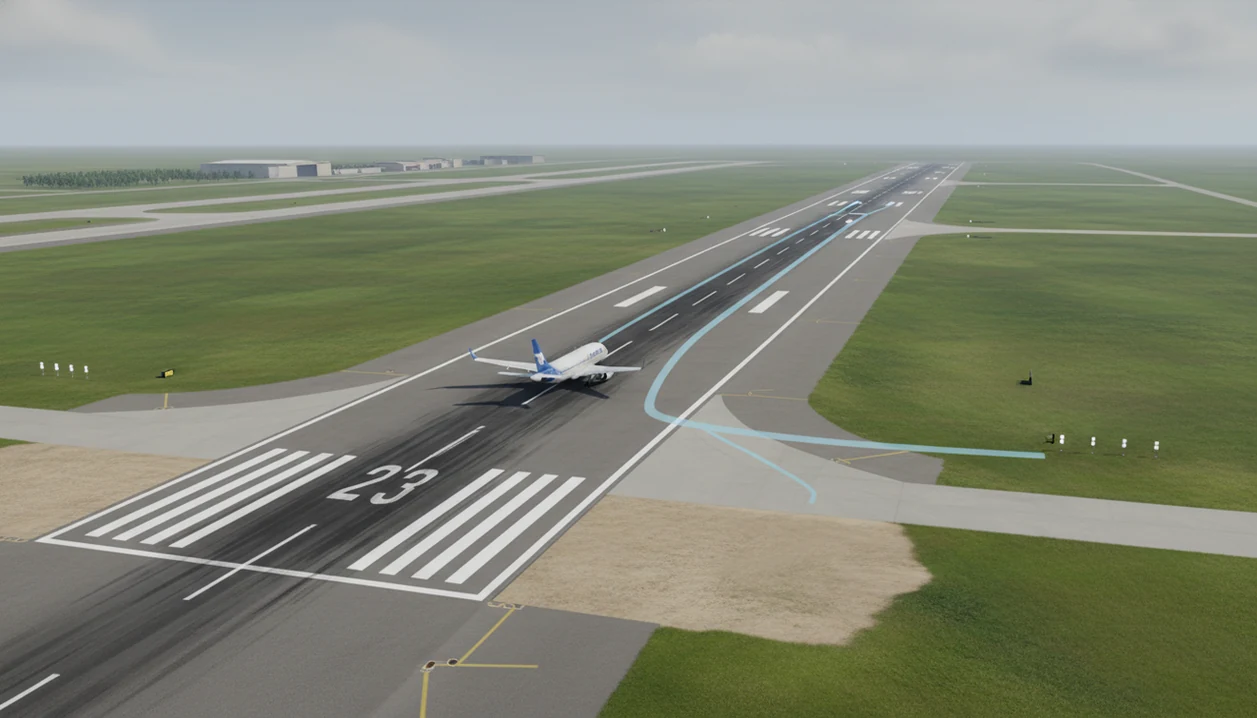
A runway excursion is an aviation safety event in which an aircraft unintentionally leaves the runway during takeoff, landing, rejected takeoff, or rollout. It includes both a runway overrun off the end and a runway veer off the side, and it matters because it is one of the most common accident categories in aviation safety data.
> Definition: A runway excursion means an aircraft departs the runway surface by overrunning the end or veering off the side during takeoff, landing, or rollout.
TL;DR
- Runway excursions include runway overruns and runway veer-offs, not unauthorized runway entries.
- Landing excursions are more common than takeoff excursions, especially when approaches are unstable or runway surfaces are contaminated.
- Accident databases classify excursions by phase of flight, direction of departure, damage, injuries, runway condition, and contributing factors.
Runway excursion definition in aviation records
A runway excursion means an aircraft unintentionally leaves the runway surface during takeoff, landing, rejected takeoff, or rollout. Aviation records usually split the event into two forms: a runway overrun off the end, or a runway veer off the side.
In plain language, the aircraft did not stay on the runway it was using. That can happen at high speed after a rejected takeoff, during the landing roll, or after touchdown when stopping performance is worse than expected. It is not the same as a runway incursion, which involves an incorrect presence on a runway.
Investigators and safety databases treat runway excursion as a runway safety event category. In a gray-cover final report, the label may sit beside fields for phase of flight, runway condition, aircraft damage, fatalities and survivors, and investigation phase. Small labels matter here.
Five runway excursion facts readers should know
- A runway excursion is either an overrun or a veer-off. A runway overrun leaves the end of the runway; a runway veer off leaves the side.
- Excursions can occur in several phases. Records may classify events during landing, takeoff, rejected takeoff, rollout, or sometimes high-speed taxi, depending on the database rules.
- Landing excursions dominate many historical data sets. For example, IATA’s 2005–2007 runway excursion review reported that 93% of runway excursion accidents in that sample occurred during landing; add the verified IATA source URL inline here. The pattern often appears after excess speed, late touchdown, unstable approach, or reduced braking margin.
- Common factors repeat across reports. Investigators often examine unstable approaches, contaminated runways, crosswinds, poor visibility, pilot technique, braking system issues, and mechanical failures.
- Prevention is layered, not single-cause. Stabilized-approach rules, runway condition reporting, performance calculations, pilot training, and engineered systems such as EMAS all reduce risk.
For researchers, classification is often more useful than narrative wording because it lets similar events be compared across aircraft types, airports, and years.
How runway excursion events work during takeoff and landing
Runway excursion events work through a loss of runway margin. The chain usually includes aircraft speed, touchdown point, braking action, lateral control, runway length, and the distance left to stop or remain aligned.
On landing, an aircraft arriving fast, high, or long has less runway available after touchdown. Wet, icy, snowy, slushy, or otherwise contaminated surfaces reduce friction, which is the grip needed for braking and directional control. If the crew delays a go-around after an unstable approach, the remaining margin can disappear quickly.
The wing flexing outside the window can look normal to a nervous passenger, but the real numbers are on the landing performance card.
Takeoff excursions follow a different chain. A rejected takeoff, engine problem, directional-control loss, or insufficient stopping distance can lead to an overrun or side departure. Investigators then compare actual conditions with performance calculations, crew actions, and runway status at the time.
Runway overrun vs runway veer off vs runway incursion
A runway overrun, runway veer off, and runway incursion are separate terms. Only the first two are runway excursion types; an incursion is about something being on the runway when it should not be there.
| Term | Direction | Typical phase | Example wording |
|---|---|---|---|
| Runway overrun | Off the end | Landing, rejected takeoff, rollout | “The aircraft overran Runway 27 after landing.” |
| Runway veer off | Off the side | Landing rollout, takeoff roll | “The aircraft veered left off the runway.” |
| Runway incursion | Onto or within runway protected area | Taxi, takeoff, landing clearance sequence | “A vehicle entered the active runway without clearance.” |
| Landing excursion | End or side departure after landing | Touchdown and rollout | “The aircraft departed the runway after a long touchdown.” |
A quiet archive reading room makes the distinction obvious: one PDF describes aircraft motion off pavement, while another describes traffic conflict on pavement. Similar words, different safety categories.
Common runway excursion causes in accident investigations
Investigators rarely treat a runway excursion as one simple mistake. They usually map a chain of operational, environmental, technical, and human factors, then separate confirmed findings from plausible but unproven details.
- Unstable approach profile. Excess speed, high sink rate, tailwind, or a late touchdown can leave too little runway after landing.
- Contaminated runway surface. Standing water, ice, snow, slush, or rubber buildup can reduce braking action and directional control.
- Weather and workload. Crosswinds, poor visibility, wind shear, and storm cells raise crew workload, especially near touchdown. These factors also appear in broader weather related plane crashes research.
- Performance or system issues. Incorrect calculations, late braking, delayed thrust-reverser use, anti-skid faults, or other braking problems can affect stopping distance.
- Human factors. Continuation bias, go-around decision-making, monitoring gaps, and crew resource management often receive close review.
The runway incursion diagram on a training projector looks different, but the human factors notes often overlap.
Runway excursion statistics and safety significance
Runway excursions are significant because multiple safety studies have found them to be a major accident category. The exact percentage changes by period, aircraft scope, and classification method, so the number should never be used without its source status.
Key runway excursion data points:
| Source or study period | Finding | Interpretation |
|---|---|---|
| Flight Safety Foundation ALAR Task Force, 1984–1997 | Excursions and overruns were involved in 20% of 76 approach-and-landing accidents and serious incidents worldwide. | Excursions were a major approach-and-landing risk in that historical sample. |
| IATA analysis, 2009–2013 | Runway excursions accounted for 28% of all accidents, making them the most common accident category in that data set. | The category remained prominent in airline safety analysis. |
| IATA runway excursion review, 2005–2007 | 93% of runway excursion accidents occurred during landing. | Landing excursions dominated that study period. |
| IATA runway excursion review, 2005–2007 | More than 50% were associated with contaminated runways. | Surface condition was a recurring contributor. |
A good aviation accident database with plane crash statistics, incident reports, fleet safety records, and recent accident news delivers source-labeled context, not a scoreboard for fear or airline rankings.
Runway excursion examples in database classification
Structured records classify runway excursions by what happened, when it happened, and what investigators confirmed. Tools like Air Crash DB use this data-first framing so a reader can compare events without turning early reports into final conclusions.
In AirCrashDB, that means the same event should not be treated as a final runway excursion finding until the source status, investigation phase, and classification fields support it. AirCrashDB records are best read as source-indexed safety data, not live operational risk ratings.
- Long touchdown on a wet runway. A landing excursion may be coded with landing phase, wet runway condition, overrun direction, airport, aircraft type, and damage level.
- Rejected takeoff overrun. A high-speed rejected takeoff may be classified as takeoff phase, runway overrun, mechanical or performance factor under review, and investigation status preliminary.
- Crosswind landing rollout. A runway veer off may include crosswind component, lateral departure, runway surface status, and crew handling findings.
- Braking or thrust-reverser issue. A landing excursion may track braking system status, thrust-reverser deployment, touchdown zone, and stopping-distance evidence.
The PDF table of wreckage coordinates is not the headline. In database work, the fields “source,” “status,” “last updated,” and “investigation phase” do the heavier work.
When runway excursion classification applies and when it does not
Does runway excursion classification apply whenever an aircraft leaves pavement? Not always. It applies when an aircraft unintentionally departs the runway surface during a relevant takeoff, landing, rejected takeoff, rollout, or closely related runway phase.
The classification can apply to fatal, non-fatal, damaged, and sometimes minor events if official reporting criteria are met. A landing excursion, takeoff excursion, rejected takeoff overrun, or lateral runway veer off may all fit.
It does not usually apply to a runway incursion, a taxiway excursion with no runway involvement, normal off-runway operations, or aircraft following planned routing from paved to unpaved areas. National authorities and accident databases may treat edge cases differently, especially when early press releases use loose wording.
For data users, the safer method is to compare the official docket against the database definition. The broader aviation accident data methodology explains why classification rules change the count.
How to use runway excursion data
Use runway excursion data as a source-checked classification tool, not as a shortcut label from a headline. The best reading starts with report status, then tests whether the event fields actually support the category.
- Start with the authority record and its status. A final report, preliminary report, press release, and database note carry different weight, so do not treat them as equal evidence.
- Check the departure type. Confirm whether the aircraft overran the runway end, veered off the side, or was involved in a separate runway incursion or taxiway event.
- Compare the structured fields before drawing conclusions. Phase of flight, runway condition, damage level, injuries, aircraft operation, and investigation phase often tell a clearer story than narrative wording.
- Separate confirmed findings from early descriptions. Media phrases such as “skidded,” “slid,” or “left the pavement” may be accurate, incomplete, or later corrected.
- Use percentages only with their boundaries attached. Always name the study years, fleet or aircraft scope, geography if relevant, and the method used to count runway excursions.
Runway excursion prevention and mitigation systems
Runway excursion prevention works by preserving runway margin before it is lost. Operators, airports, manufacturers, and regulators all influence that margin through procedures, training, surface reporting, and engineered safeguards.
Stabilized approach criteria are central. If the aircraft is not on speed, on path, configured, and under control by the required gate, a go-around policy should remove the pressure to continue. Performance calculations then connect aircraft weight, wind, runway length, slope, surface condition, and braking action to a defensible landing or rejected-takeoff plan.
Airport measures also matter. Runway grooving improves drainage, friction programs track surface condition, runway end safety areas reduce severity, and EMAS can help arrest an aircraft after an overrun. The FAA describes EMAS as crushable material installed beyond some runway ends to slow or stop an overrunning aircraft: https://www.faa.gov/airports/engineering/aircraft_arresting. Student notes on human factors often put this bluntly: decide early, because late decisions cost distance.
Prevention reduces likelihood and severity, but it cannot make runway excursions impossible. That is why final reports often combine procedure, training, runway condition, and equipment findings.
Limitations
Runway excursion data is useful, but it has limits. Treat every percentage as a source-specific finding, not a universal risk number.
- Global runway excursion percentages vary by source, study years, fleet scope, aircraft size, and methodology.
- Minor or non-fatal runway excursion incidents may be under-reported or classified differently across countries.
- Accident databases can lag behind recent changes in training, runway technology, airport construction, and traffic patterns.
- Broad global statistics should not be treated as precise risk estimates for one airport, airline, aircraft type, or flight.
- EMAS, runway grooving, friction management, and stabilized-approach policies reduce risk or severity, but they do not eliminate it.
- Investigation findings can change as new evidence appears, especially after a preliminary report.
- Early media descriptions may confuse runway overrun, runway veer off, runway incursion, and taxiway excursion.
As of any update, source status matters. A press release, preliminary report, and final accident report are not equal records.
FAQ
What is a runway excursion?
A runway excursion is when an aircraft unintentionally leaves the runway surface during takeoff, landing, rejected takeoff, or rollout. It includes both a runway overrun off the end and a runway veer off the side.
What causes runway excursions?
Common causes include unstable approaches, excess speed, late touchdown, contaminated runways, crosswinds, poor visibility, braking issues, and delayed go-around decisions. Investigators usually examine multiple contributing factors rather than one isolated cause.
Is a runway excursion always classified as an accident?
No. Classification depends on damage, injuries, aircraft operation, and the reporting rules used by the investigating authority or database.
What is a runway overrun?
A runway overrun occurs when an aircraft leaves the end of the runway during landing, rejected takeoff, takeoff, or rollout. It is one of the two main runway excursion types.
What is a runway veer off?
A runway veer off occurs when an aircraft leaves the side of the runway instead of the end. It may happen during takeoff roll, landing rollout, or directional-control loss.
How common are runway excursions?
Historical safety studies have found runway excursions to be a major accident category, including an IATA analysis where they accounted for 28% of accidents from 2009 to 2013. Rates vary by source, aircraft scope, time period, and classification rules.
How are runway excursions prevented?
Prevention uses stabilized approaches, timely go-arounds, accurate runway condition reporting, landing and takeoff performance calculations, pilot training, and airport safeguards such as grooving, runway end safety areas, and EMAS. These measures reduce risk but cannot remove it completely.