
Weather Related Plane Crashes And Aviation Risk Factors
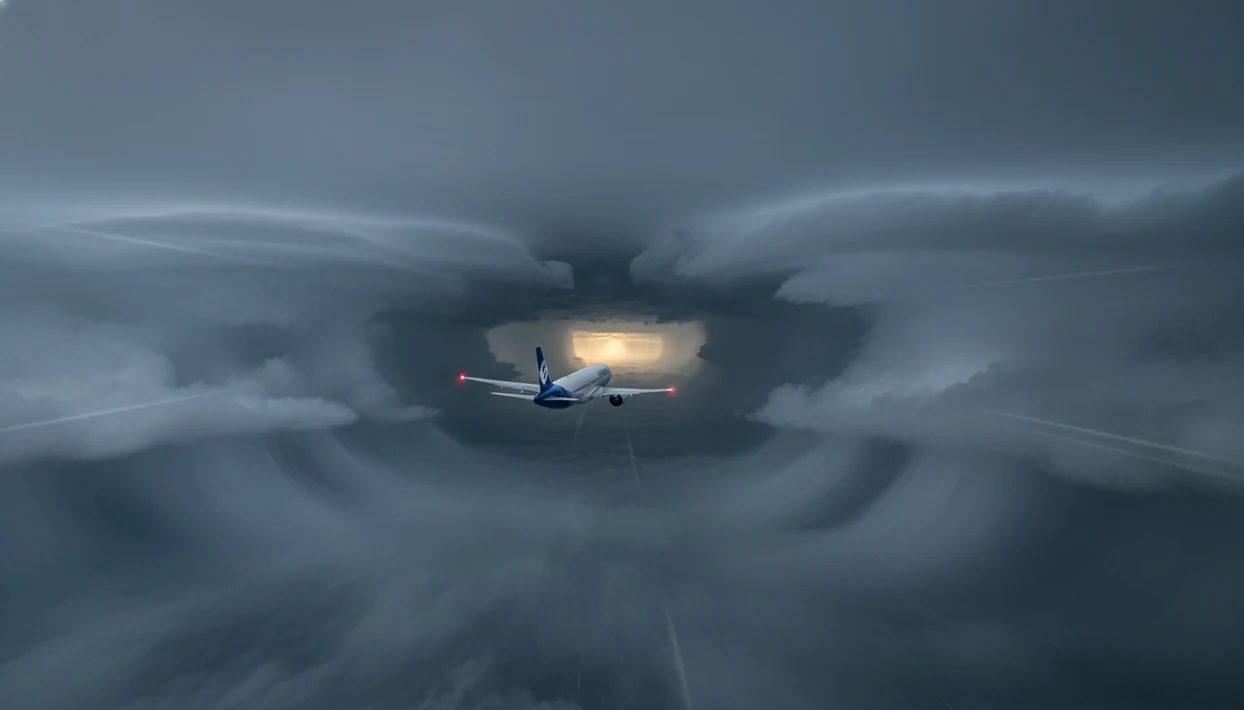
Weather related plane crashes happen when conditions such as low visibility, icing, thunderstorms, wind shear, turbulence, or strong winds contribute to an accident, usually alongside human, mechanical, or operational factors. Weather is best understood as a risk multiplier, not a single-cause explanation.
Definition: A weather-related aviation accident is an accident or serious incident in which weather is identified by investigators as a cause, contributing factor, or operational hazard affecting the flight.
TL;DR
- Weather contributes to many aviation accidents, but it rarely acts alone.
- General aviation faces much higher weather exposure than scheduled airline operations.
- Low ceilings, poor visibility, precipitation, icing, thunderstorms, wind shear, and strong winds are the key hazards investigators track.
Weather related plane crashes: the accident-definition test
A weather-related crash is not simply a crash that happened on a rainy day. Investigators classify weather as causal, contributing, or contextual after reviewing evidence from the flight, the aircraft, the crew, and the operating environment.
Qualifying hazards can include storms, icing, low ceilings, fog, precipitation, wind shear, turbulence, and strong crosswinds. The wording matters. A final report may say weather “contributed to” loss of control, or it may describe weather as a condition that increased pilot workload.
Weather-related does not mean weather-only.
Tools like Air Crash DB frame these events as database records, not suspense stories: aircraft registration, operator, phase of flight, fatalities and survivors, source status, and investigation phase. That structure helps separate the record from the rumor, especially when early news reports overstate a single factor.
How weather-related plane crashes work
Weather-related plane crashes work by reducing the safety margins a flight normally depends on. Weather is usually not the whole cause; it narrows the space between a manageable flight and an unrecoverable situation.
Low visibility can remove outside references and make terrain, runway alignment, or traffic harder to judge. Icing changes the wing’s airflow, reducing lift and increasing drag. Wind can push an aircraft off course, create crosswind landing problems, or produce wind shear, a sudden change in wind speed or direction. Storms combine several hazards at once: turbulence, hail, heavy rain, lightning, and strong vertical air movement.
The accident chain often develops in a sequence:
- Reduce margins through ceiling, visibility, ice, wind, or convective weather.
- Increase workload as the pilot or crew manages navigation, aircraft control, and changing options.
- Test aircraft and equipment limits, including anti-icing systems, radar, instruments, and performance capability.
- Expose decision points, such as continuing, diverting, delaying, or going around.
- Classify weather in the report as a cause, contributing factor, or background condition.
That is why final reports usually list several factors. Weather sets the stage, but procedures, training, equipment, timing, and decisions often determine the outcome.
Five facts about weather aviation accidents and fatal risk
- In U.S. general aviation from 1982 to 2013, weather was a cause or contributing factor in 25% of all accidents, or 15,439 weather-related accidents, according to Fultz and Ashley’s 2016 study source.
- In the same period, weather was involved in 35% of fatal U.S. general aviation accidents. That fatal share is why weather belongs in any serious discussion of plane crash causes.
- Ceiling, visibility, and precipitation hazards produced a disproportionate share of fatalities, even though they were not the largest share of all weather-related events.
- An FAA-sponsored review of 2009 to 2018 Part 91 weather-related accidents and incidents found that 29.4% of those events were fatal, causing 845 fatalities source.
- General aviation statistics should not be applied directly to scheduled airline passengers. Private, instructional, and business flights face different equipment, dispatch, training, and weather-minimum environments.
The spreadsheet rows look similar. The operations are not.
NTSB weather accident investigations and crash-factor chains
Weather-related plane crashes usually work through an accident chain: weather reduces margins, the crew or aircraft has fewer recovery options, and another factor turns the hazard into an accident. It can reduce aircraft performance, increase pilot workload, obscure terrain, degrade visual references, or pressure a crew into a late decision.
Investigators compare meteorological reports, radar returns, flight path data, pilot actions, aircraft systems, and operating rules. On the gray PDF cover pages, the final report may look tidy. Inside the docket, the chain is usually messier.
Common compound patterns include VFR flight into IMC, icing plus climb-performance loss, storm avoidance failure, and wind shear on approach. A weather radar image on a tablet can show the hazard, but it does not explain every cockpit decision.
Final reports usually identify several contributing factors. Weather may sit beside decision-making, training, equipment limits, dispatch planning, or maintenance findings, including issues covered in mechanical failure plane crashes.
Before you read a weather-related crash report
Before reading a weather-related crash report, first establish what kind of document you have and what it can safely prove. A preliminary notice, factual docket, and final report do not carry the same weight.
- Confirm the report status before quoting causation. Preliminary reports often describe what is known early, while final reports contain the investigator’s formal findings and probable-cause language.
- Identify the operation type before comparing risk. A Part 91 training flight, a private business trip, a cargo operation, and a scheduled airline flight may share weather, but not the same support system.
- Separate the weather record into observations, forecasts, and radar or satellite context. What was reported at the airport, what was forecast, and what appeared on radar can answer different questions.
- Treat early news wording as unconfirmed background. Phrases such as “crashed in bad weather” are not the same as an investigator finding that weather caused or contributed to the accident.
- Check whether fatalities, injuries, and aircraft damage are final. Early counts and damage descriptions can change after recovery work, medical updates, and the official docket are complete.
Six steps for reading weather related plane crash reports
For researchers, the safest reading method is to follow the report categories before drawing a conclusion. The probable-cause paragraph should be read last, after the source status and evidence trail.
- Check the operation type: Identify whether the flight was Part 91, instructional, charter, cargo, or scheduled airline service.
- Read the weather conditions: Note ceilings, visibility, precipitation, icing forecasts, convective activity, and winds.
- Identify the phase of flight: Separate en route, approach, landing, takeoff, and go-around risks.
- Review the pilot and aircraft context: Look at certification, instrument currency, onboard equipment, anti-icing capability, and relevant limitations.
- Compare investigator wording: Distinguish “cause,” “contributing factor,” and “condition present at the time.”
- Hold the conclusion: Wait for the final report when only a preliminary report or press release exists.
Aviation accident database with plane crash statistics, incident reports, fleet safety records, and recent accident news should deliver sourced context, not instant blame.
For citation work, record the report status, accident date, aircraft type, operation type, weather finding, and exact investigator wording before summarizing causation. That keeps a weather tag from becoming an unsupported single-cause claim.
General aviation versus airline weather aviation accidents
General aviation includes private, instructional, business, aerial work, and other non-airline Part 91 operations. Scheduled airline operations use more layered weather defenses: dispatch support, two-pilot crews, onboard radar, stricter minima, alternate planning, and formal de-icing procedures.
| Category | General aviation weather exposure | Scheduled airline weather exposure |
|---|---|---|
| Typical operations | Private, training, business, Part 91 | Scheduled passenger or cargo service |
| Weather support | Often pilot-managed | Dispatcher, ATC, crew, company procedures |
| Equipment | Varies widely by aircraft | Standardized radar, avionics, anti-icing systems |
| Key caveat | 1982 to 2013 and 2009 to 2018 studies show high fatal shares | Risk is reduced, not erased |
For airline passengers, general aviation data is a warning against category confusion. It is not a direct passenger-risk estimate.
Modern airline storm avoidance is layered risk management. Not magic.
Icing accidents, storm related crashes, and low-visibility hazards
Icing: Ice can reduce lift, increase drag, block sensors, and degrade climb performance. De-icing and anti-icing procedures matter because a thin rough layer can change how a wing behaves.
Thunderstorms: Convective weather brings turbulence, lightning, hail, heavy rain, wind shear, and microbursts. Crews avoid cells because the danger is the package, not one dramatic flash.
Low ceilings and visibility: These hazards raise controlled-flight-into-terrain, spatial-disorientation, runway, and approach risks. In U.S. general aviation from 1982 to 2013, ceiling, visibility, and precipitation made up 27% of weather-related accidents but 71% of weather-related fatalities. Fultz and Ashley report that ceiling, visibility, and precipitation hazards represented 27% of weather-related accidents but 71% of weather-related fatalities in U.S. general aviation from 1982 to 2013 source.
Strong winds and crosswinds: Wind can contribute to loss of control, unstable approaches, hard landings, and a runway excursion. A go-around is often the safer operational decision, even when it feels abrupt from row 18.
Four myths about storm related crashes and turbulence
Does bad weather alone usually cause crashes? Usually, no. Weather more often combines with pilot decisions, aircraft performance limits, operational pressure, or equipment issues.
Myth 1: Bad weather alone usually causes crashes. Final reports commonly list multiple factors, not one weather label.
Myth 2: Commercial jets routinely crash in storms. Airlines use dispatch planning, ATC coordination, weather radar, alternate airports, and minima to avoid severe convective weather.
Myth 3: Turbulence is the main killer in weather accidents. Turbulence can injure passengers and disrupt operations, but low ceilings, visibility, and precipitation dominate fatal general aviation weather patterns.
Myth 4: Any takeoff in snow or storms means gambling. De-icing rules, runway condition reporting, performance calculations, and departure minima are designed to reduce risk.
A muted newsroom television crawl rarely captures those operational layers.
Phase-of-flight patterns in weather related plane crashes
Phase of flight changes the risk analysis. Approach and landing expose aircraft to low ceilings, visibility limits, wind shear, crosswinds, unstable approaches, and runway alignment decisions.
En route weather still matters, especially in general aviation and Part 91 operations. The 2009 to 2018 FAA-sponsored Part 91 study found that en route flight accounted for 52% of the most severe weather-related accidents and incidents. source. That finding pushes against the idea that weather risk lives only near airports.
For accident comparison, review phase of flight before comparing aircraft, operators, or fatalities. A cruise icing event, a thunderstorm deviation, and a foggy nonprecision approach are different safety problems. The data method behind that distinction is covered in aviation accident data methodology.
Limitations
Weather accident statistics are useful, but they need careful boundaries.
- Cause classifications vary across investigators, databases, and study designs.
- Multiple contributing factors make single-cause weather counts misleading.
- U.S. general aviation data cannot be directly applied to global airline safety.
- Older studies may not reflect modern radar, forecasting, cockpit displays, training, and de-icing standards.
- Clear-air turbulence, microbursts, and near-miss events may be underreported or hard to detect.
- Fatal-accident patterns differ from all-accident patterns, especially when low visibility is involved.
- Preliminary reports can change after the official docket adds lab work, interviews, and performance analysis.
As of any update, source status matters. AirCrashDB and similar structured references are most useful when they show whether a record is preliminary, final, or still awaiting investigator findings.
FAQ
Can weather cause plane crashes?
Yes. Weather can contribute to crashes, but it usually combines with human, mechanical, or operational factors.
Are storms dangerous for airplanes?
Storms can be dangerous because they may contain wind shear, hail, lightning, heavy rain, and convective turbulence. Airline procedures are built around avoiding the most severe storm cells.
Do planes crash because of fog?
Fog can contribute to accidents by reducing visibility during approach, landing, taxi, or terrain avoidance. Investigators usually examine procedures, instruments, minima, and pilot decisions too.
What are icing accidents?
Icing accidents involve ice accumulation that reduces lift, increases drag, blocks sensors, or degrades aircraft performance. The risk depends on aircraft equipment, weather intensity, and crew response.
Is turbulence a crash risk?
Turbulence can injure passengers and complicate flight operations. It is not the leading fatal weather factor in the general aviation research cited here.
Do airlines usually avoid storms?
Yes. Airlines use dispatch planning, onboard radar, routing, ATC coordination, and alternate planning to avoid severe convective weather.
Which flight phase is riskiest in bad weather?
It depends on the hazard. Approach and landing face visibility, wind shear, and crosswind risk, while en route weather is important in Part 91 and general aviation operations.
Where are weather-related plane crashes recorded?
Weather-related crashes are recorded in official investigation systems such as NTSB records and in structured aviation accident databases. Air Crash DB can help readers compare source status, aircraft details, and final-report wording.