Fatal accident · Indonesia
Lion Air Boeing 737 MAX 8 crash in the Java Sea off Jakarta
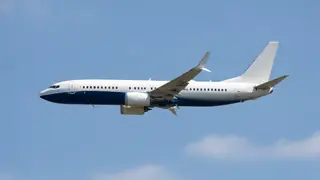
Lion Air Flight 610, a Boeing 737 MAX 8 registered PK-LQP, crashed into the Java Sea off Tanjung Karawang, West Java, Indonesia, on 29 October 2018, shortly after leaving Jakarta. All 189 people on board died. Indonesia's KNKT investigated and published its final report on 25 October 2019.
This is one of 2 Lion Air fatal accidents on record. See also all plane crashes in 2018.
Thirteen minutes from Jakarta to the Java Sea
Lion Air Flight 610 was a scheduled domestic service from Soekarno-Hatta International Airport in Jakarta to Depati Amir Airport in Pangkal Pinang. The Boeing 737 MAX 8 took off from runway 25L at about 06:20 local time (WIB, UTC+7) on 29 October 2018.
It crashed into the Java Sea off Tanjung Karawang, West Java, north-east of Jakarta, at about 06:33. That is roughly 13 minutes after departure. Some sources put the interval at 11 to 13 minutes. The exact recorded time of impact is not given in the material available here. There were no survivors.
Weather was reported as generally clear, with good visibility, no cumulonimbus cloud and a light north-westerly wind of about 9 km/h. That detail comes from a secondary summary, not from the KNKT report excerpts, so it is reported but not independently verified.
What the recorders and the KNKT found
Indonesia's National Transportation Safety Committee, the KNKT, investigated the loss of the Lion Air 737 MAX 8 under report number KNKT.18.10.35.04. It was not the NTSB or the FAA that led the work. The FAA's later summary of the KNKT findings describes what the flight data recorder showed.
- Erroneous angle-of-attack inputs repeatedly triggered the Maneuvering Characteristics Augmentation System, or MCAS.
- MCAS commanded nose-down trim again and again during the climb.
- The crew countered with trim inputs, but the first officer's inputs were inadequate to offset the MCAS commands.
- The aircraft kept moving nose down without being commanded to, the crew could not maintain altitude, and it entered the sea.
The KNKT listed several contributing factors: aircraft design and MCAS, FAA certification, Lion Air maintenance, and flight-crew responses. For background on how such findings are reached, see how investigators determine the cause and what probable cause means.
A two-month-old aircraft and a domestic airline
The Lion Air aircraft was a Boeing 737-8, commonly called the 737 MAX 8, registered PK-LQP. It was about two months old at the time of the crash. The exact delivery date and age in days are not given in the material reviewed.
The operator was PT Lion Mentari Airlines, flying as Lion Air. Flight 610 carried 181 passengers and 8 crew, 189 people in total. All 189 died. Nobody on the ground was reported killed, since the aircraft came down in the sea.
The accident was the first and only one for PK-LQP, and no 737 MAX had been lost in a hull-loss accident before it. A complete list of earlier Lion Air accidents is not available in the material reviewed, so none are listed here.
The sensor replaced the night before and the two pilots
Lion Air Flight 610 was flown by PK-LQP, a Boeing 737-8 delivered to Lion Air on 16 August 2018. It was about 2 months and 13 days old at the time of the crash and had logged roughly 895 flight hours and 895 flight cycles.
The KNKT report records air-data and flight-control problems on the aircraft before the accident. The most significant came on the previous flight, JT043 from Denpasar to Jakarta on 28 October. The angle-of-attack sensor was unreliable on that flight, and the crew saw erroneous indications and automatic nose-down trim. The sensor was replaced in Jakarta. The replacement was incorrectly calibrated, by about 21 degrees in one account of the report and about 20 degrees in another. Either way, the left and right sensors disagreed by roughly that much on the accident flight.
The captain, Bhavye Suneja, was 31 and an Indian national, with about 6,028 total hours, including about 520 on the 737 MAX. First Officer Harvino was 41 and Indonesian, with about 5,174 hours, including about 828 on the type. The report states that both held the required licences and medical certificates and had completed Boeing 737 MAX training.
What the recorders show between 06:20 and 06:32
The KNKT reconstruction of Lion Air Flight 610 puts departure from runway 25L at 06:20:33 local time. It puts the end of flight data recording at about 06:32:15, when the aircraft struck the Java Sea off Tanjung Karawang. That is 11 minutes 42 seconds, a little shorter than the 13 minutes quoted above, which is a rounded figure.
Shortly after takeoff the captain reported a flight-control problem, and the crew saw disagreement between left and right airspeed and altitude information. Repeated automatic nose-down trim commands followed. The pilots countered with electric trim and used the stabilizer-trim cutout switches. Around 06:22 to 06:23 they asked Jakarta Departure for a return toward the airport. Controllers told them to maintain altitude and later cleared them to climb.
The stick shaker operated on the captain's side. The flight data recorder shows more than 20 MCAS activations over the flight. The report says the crew did not identify the cutout procedure as the way to stop the commands, and the crew never named MCAS on the recording.
At 06:30:57 the captain asked for a diversion, citing weather, and controllers approved it. The aircraft then entered a steep descent. The captain asked, "What is happening?" and the control inputs did not stop the dive.
The report describes clouds, rain and convective activity along the route. It did not treat weather as a cause. This differs from the clear-weather summary above, which came from a secondary source.
A tugboat saw the debris, and the cockpit voice recorder took 11 weeks to find
The search for Lion Air Flight 610 began with a sighting. A tugboat and other vessels saw floating debris in the sea off Tanjung Karawang soon after impact. Indonesia's national search and rescue agency, Basarnas, coordinated the response. The navy, police, the transportation ministry, local authorities and civilian vessels supported it.
Search and recovery began on the morning of 29 October 2018. The main wreckage lay in relatively shallow water, and divers brought up victims, wreckage and the flight data recorder. The recorder was recovered on 1 November 2018. The cockpit voice recorder was not found until 14 January 2019, after an extended search.
The formal search for victims ended on 10 November 2018, although recovery and identification work continued afterwards. The KNKT report records the later recovery of additional victims and wreckage.
There were no survivors among the 189 people on board. The manifest listed 181 passengers and eight crew, six operating crew and two cabin crew. The passengers included 178 Indonesians, one Italian and one Indian.
Nine contributing factors, then a grounding that lasted until November 2020
The KNKT final report on the Lion Air Flight 610 crash listed nine contributing factors in chronological order. It said the order did not rank their weight. They included MCAS relying on a single angle-of-attack sensor, and Boeing's incorrect assumptions about how pilots would respond. They also included an angle-of-attack disagree alert that was not working on PK-LQP, MCAS being poorly explained in manuals and training, and incomplete information carried over from the preceding flight. The ninth was the crew's workload and ineffective response. The sensor's calibration error, missed before installation, was another. KNKT addressed recommendations to Boeing, the FAA, Lion Air and the sensor repair organisation. Boeing emphasised the erroneous sensor data, maintenance history and crew response. Claims that the pilots alone caused the crash do not match the multi-factor findings. For how reports are used afterwards, see what happens after a plane crash.
After the crash the FAA issued Emergency Airworthiness Directive 2018-23-51, requiring revised runaway-stabilizer procedures in the flight manual. The FAA's Emergency Order of Prohibition grounding the MAX followed on 13 March 2019. It was rescinded on 18 November 2020 after a final rule and airworthiness directive required software, procedure, testing and training changes.
Families brought claims in the United States and Indonesia against Boeing, Lion Air and others. Boeing reached confidential settlements with many of them, so no complete public figure exists.
Final report and the 737 MAX return to service
The KNKT released its final report on the Lion Air Flight 610 accident on 25 October 2019, and the accident investigation is closed. Boeing issued a statement on the day the report came out. For the difference between interim and closing documents, see preliminary vs final accident report.
The 737 MAX record changed again within months. Ethiopian Airlines Flight 302 crashed after takeoff on 10 March 2019 and killed all 157 people aboard. It was the next fatal 737 MAX accident after Lion Air Flight 610.
The FAA states that the later return-to-service process for the 737 MAX followed both the Lion Air and Ethiopian Airlines accidents. Its summary says the work addressed MCAS and related design and certification issues. Later FAA and other regulatory reviews looked at the 737 MAX design, certification and return-to-service actions.
See airline safety records and accident history by aircraft model for wider context on how operators and types compare.
Questions people ask about this accident
What happened to Lion Air Flight 610?
Lion Air Flight 610, a Boeing 737 MAX 8, crashed into the Java Sea off Tanjung Karawang, Indonesia, about 13 minutes after leaving Jakarta on 29 October 2018. All 189 people on board died.
How many people died on Lion Air Flight 610?
All 189 people on the Lion Air Boeing 737 MAX 8 died: 181 passengers and 8 crew. No one on the ground was reported killed.
What caused the Lion Air Flight 610 crash?
Indonesia's KNKT identified several contributing factors: aircraft design and MCAS, FAA certification, Lion Air maintenance, and flight-crew responses. Erroneous angle-of-attack data repeatedly triggered MCAS nose-down commands.
Who investigated the Lion Air JT610 crash?
Indonesia's National Transportation Safety Committee, the KNKT, led the investigation. It was not the NTSB or the FAA.
When was the Lion Air 610 final report released?
The KNKT published the final report on the Boeing 737 MAX 8 crash off Jakarta on 25 October 2019.
Where did Lion Air Flight 610 crash?
It crashed in the Java Sea off Tanjung Karawang, West Java, north-east of Jakarta, shortly after taking off from Soekarno-Hatta International Airport.
What was the route of Lion Air Flight 610?
The flight was a domestic service from Jakarta (Soekarno-Hatta) to Pangkal Pinang (Depati Amir Airport) in Indonesia.
Was Lion Air Flight 610 linked to the Ethiopian Airlines crash?
The FAA says the 737 MAX return-to-service process followed both the Lion Air Flight 610 crash and Ethiopian Airlines Flight 302, which killed 157 people on 10 March 2019.
Related accidents
- 99 killed, 44 on the ground
 No fatalities
 No fatalities
- 179 killed
- 132 killed
Correct this page or send a photo
Spotted a wrong date, registration or number? Have a photo of the aircraft or the site that you took yourself? Send it here. Nothing is published until an editor has checked it.