Fatal accident · Italy
SAS Flight 686 collided on takeoff at Milan Linate
On October 8, 2001, SAS Flight 686, an MD-87, collided with a Cessna Citation II while taking off from Milan Linate. There were 114 people aboard the two aircraft, and all 114 died, along with 4 people on the ground. The cause was air traffic control error.
This is one of 5 Scandinavian Airlines (SAS) fatal accidents on record. See also all plane crashes in 2001.
Flight 686 struck a Cessna as it lifted off
Flight 686 was departing Milan for Copenhagen from Linate Airport in fog and poor visibility. As the MD-87 rotated for takeoff, it hit a German Cessna 525A Citation II business jet that had entered the active runway by mistake while preparing to leave for Paris.
The MD-87 did get airborne, but only briefly. It stayed in the air for about nine seconds, too badly damaged to continue flight, then veered off the runway and hit the airport's baggage handling building. The impact and post-crash fire destroyed the aircraft.
The Cessna was taxiing after tower instructions to enter a different taxiway and hold short of the runway. Instead, it reached the runway itself, creating a runway incursion directly in the path of the departing airliner.
The Cessna crew did not stop short of the runway
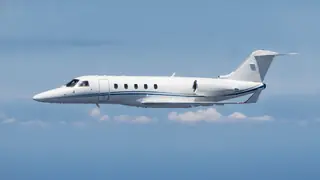
The Cessna Citation II was a small business jet, very different in size and role from the MD-87 airliner. It carried two passengers and two crew. On the SAS aircraft, there were 104 passengers and 6 crew. Everyone on both aircraft was killed, and four people in the building were also killed.
The airport tower had instructed the Cessna to taxi to a different holding point, not onto the runway. In the poor visibility, the crew entered the active runway instead. The tower did not ask for a readback to confirm that the instruction had been understood.
Airport layout, signs, and surface guidance matter more in low visibility because crews may have few outside references. At Linate that morning, the available cues were not enough to prevent the wrong turn.
Tower procedures and airport systems failed together
Milan Linate was the place where several separate failures lined up at once. The accident was caused by air traffic control error, with human error, weak procedure compliance, and improper terminology from the tower all playing a part.
Radio communication had been conducted in English and Italian, rather than only in English. That reduced standardization at a point where clarity mattered. The tower also did not verify the Cessna's position before the takeoff clearance was used.
Other safety barriers were missing or unavailable. There was no ground radar, and runway motion sensors were turned off. It then took about 20 minutes before anyone at the airport realized the two aircraft had collided. This accident is also a clear example of how investigators sort direct actions from system failures when they determine the cause.
Lage Viking could not stay airborne after the collision
The MD-87 involved in Flight 686 was named Lage Viking. The MD-87 was a rear-engined short to medium range airliner, commonly used on European routes like Milan to Copenhagen.
After the collision, the aircraft's damage was severe enough that continued flight was not possible. The short lift-off showed that the crew had reached flying speed and had begun normal rotation, but the strike with the Cessna had already made the aircraft uncontrollable as a safe departure.
Runway collisions are rare because airports rely on layered defenses, clear phraseology, position awareness, and independent checks in the tower and cockpit. When those barriers break down at the same time, the result can become a collision followed by a runway excursion and impact off the runway, as it did here.
Questions people ask about this accident
What happened to SAS Flight 686 in Milan?
SAS Flight 686, an MD-87, collided with a Cessna Citation II during takeoff from Milan Linate in fog and poor visibility. The damaged MD-87 briefly became airborne, then left the runway and hit the airport's baggage handling building.
What caused the Milan Linate runway collision in 2001?
The cause was air traffic control error. The Cessna entered the active runway by mistake, tower terminology and procedures were poorly followed, and the tower did not confirm the instruction with a readback.
How many people died in the SAS Flight 686 crash?
All 114 people aboard the two aircraft were killed, along with 4 people on the ground. That included 110 on the SAS MD-87 and 4 on the Cessna Citation II.
How long did the MD-87 stay in the air after hitting the Cessna?
The MD-87 remained airborne for about nine seconds after the collision. It was too badly damaged to sustain flight.
Related accidents
- 81 killed
- 108 killed
- 115 killed
- 68 killed
 9 killed
Correct this page or send a photo
Spotted a wrong date, registration or number? Have a photo of the aircraft or the site that you took yourself? Send it here. Nothing is published until an editor has checked it.